There is something timeless about a gentle spin. The soft whoosh of air, the shared giggles, the sense that the world becomes a blur of color and light—carousels embody pure childhood wonder. When that magic arrives in your own backyard, it transforms a simple lawn into a living playground. In this comprehensive guide, you will find inspiring designs, practical build tips, and essential safety guidance to create a carousel space that is beautiful, durable, inclusive, and tailor-made for your family. If you have been searching for Garden carousel ideas for children that look stunning and stand up to real play, you are in the right place.
Why a Carousel Belongs in Your Garden
Carousels—large and small—offer more than eye-catching charm. They are dynamic play anchors that bring kids of different ages together. Besides the sheer fun of spinning, they help develop balance, spatial awareness, vestibular input, and social cooperation. In a garden setting, these benefits unfold in nature, magnifying the experience with birdsong, sun-dappled leaves, and fragrant blooms. The result is a multi-sensory oasis that welcomes children outdoors for longer and more meaningful play sessions.
- Movement mastery: Spinning nurtures balance, core strength, and coordination as kids learn to modulate speed and posture.
- Social skills: Turn-taking, teamwork, and verbal negotiation naturally grow around a shared carousel platform.
- Imagination: Themes—from rocket ships to fairy groves—spark pretend play that keeps kids coming back.
- Nature connection: Rotating viewpoints reveal seasonal colors, pollinator plants, and sky patterns, turning every spin into discovery.
Planning First: Space, Budget, and Safety
Before you dive into designs, set your foundation. Smart planning ensures your project suits your space, your budget, and your kids for years to come.
Measure the Zone
Begin with a simple site survey. Identify level ground with good drainage and consider how the carousel will fit within circulation paths, garden beds, and seating areas. A safe-use zone is key—plan at least 1.5 to 2 meters of clear space around the perimeter of the carousel to prevent collisions and allow easy movement.
Budget Smartly
Costs vary with size, materials, and whether you buy or build. Small DIY spinners can be assembled from reclaimed timber and a robust bearing at a modest cost, while premium merry-go-rounds with custom theming will be pricier. Budget not only for the structure but also for impact-absorbing surfacing, anchors, and maintenance.
Safety at the Core
Follow recognized playground guidance such as EN 1176 or ASTM F1487. Prioritize features like non-pinch rotating joints, rounded edges, high-traction surfaces, and enclosure elements for younger children. Consider the fall height and use appropriate surfacing like rubber mulch, poured-in-place rubber, engineered wood fiber, or pea gravel within the recommended depth.
Three Big Paths: Buy, Customize, or DIY
Choosing how to bring your carousel to life depends on skill level, timeline, and desired aesthetics.
- Buy ready-made: Commercial-grade spinners and merry-go-rounds are engineered for safety and durability, often with warranties. Great for families who want plug-and-play reliability and compliance.
- Customize: Start with a solid, certified base unit and add your own decorative panels, paint schemes, canopy, and themed accessories for a signature look.
- DIY: Ideal for makers who enjoy woodworking or metalwork. Requires careful material selection, accurate assembly, and rigorous safety checks—but rewards you with a personalized, budget-conscious build.
Types of Garden Carousels and Spinners
Not all carousels are alike. The best fit depends on your children’s ages, the available space, and your design goals.
Low-Profile Platform Merry-Go-Round
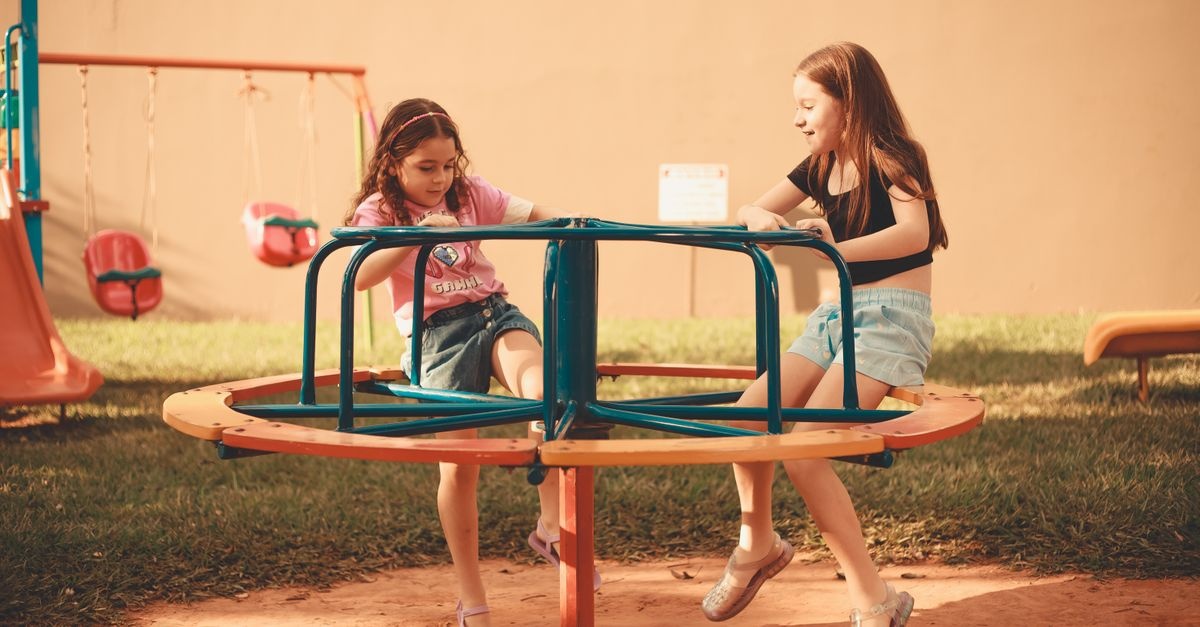
A classic circular deck that rotates around a central axis. Choose low-to-ground designs with grab bars for younger kids. Add anti-slip decking, drainage holes, and edge guards. This is a beautiful anchor piece for a medium-to-large yard and can be themed to match your garden character.
Standing Post Spinners
Compact, dynamic, and great for small spaces. Kids hold onto a central post and run or twist to spin. Variants include sit-and-spin bowls, standing plates, and duo-disc spinners. These excel in tight corners and as part of modular play circuits.
Seated Dish or Bowl Spinners
Concave seats cradle one or more children, offering a semi-reclined spin with good lateral support. With proper surfacing and supervision, they suit a range of ages and deliver vestibular stimulation in a relaxing posture.
Rope-and-Ring Rotators
Overhead rings, handles, or loops attached to a central mast let children hang, pivot, and rotate. These support upper-body strength and dynamic play. Ensure fall zones are clear and surfaces below are impact-absorbing.
Theme Ideas That Spark Endless Play
Carousels double as story engines. A compelling theme invites kids to name characters, invent missions, and return to the garden for new adventures.
- Enchanted Garden: Vines, leaf cutouts, butterfly motifs, and mushroom seats make the carousel feel grown from the earth. Complement with pollinator plants and solar fairy lights.
- Vintage Carnival: Bold stripes, brass accents, and painted animal silhouettes echo traditional merry-go-rounds. Add a hand-crank music box nearby for playful ambiance.
- Ocean Voyage: Ship’s wheel, porthole windows on panels, and rope details create a nautical vibe. Blue-green palettes blend seamlessly with water-wise plantings.
- Space Explorer: Rocket fins, constellation decals, and metallic hues inspire STEM-rich questions about gravity and rotation.
- Woodland Creatures: Carved foxes, owls, and hedgehogs as handles or seats. Use natural stains that celebrate wood grain.
- Around the World: Panels painted with landmarks, greetings in multiple languages, and patterns celebrating different cultures foster inclusivity and curiosity.
Age-Appropriate Design
Toddlers (1–3 years)
Keep the platform very low, rotations slow, and handholds plentiful. Consider small-bowl spinners with supportive backs or mini-platforms with perimeter rails. Surfaces should be soft and warm to the touch.
Preschoolers (3–5 years)
Offer gentle challenge with stable platforms and easy-to-grasp bars at multiple heights. Add visual cues, such as arrows showing spin direction and high-contrast edges for visibility. Textured, slip-resistant decking is essential.
School-Age (6–10 years)
Introduce variety: standing plates, rope elements, and slightly higher rotational potential. Provide rules signage and clear sightlines for supervision. Mix in imaginative themes to sustain interest.
Mixed Ages
Use zones and choices: a central merry-go-round with an outer ring of smaller spinners lets kids self-select difficulty. Provide nearby seating for caregivers and space for strollers.
Inclusive and Sensory-Friendly Features
Great play is for every child. Design with different abilities and sensory preferences in mind.
- Accessible entries: Ramps or flush thresholds on platform carousels help kids using mobility devices join the fun.
- Supportive seating: Backrests, transfer points, and high-contrast grab bars increase independence.
- Sensory layering: Soft chimes, textured panels, scent-rich plantings (like lavender or mint), and gentle lighting provide multi-sensory delight without overload.
- Predictability: Visual schedules or pictograms can show how to queue, board, spin, and exit, making turn-taking clearer.
Materials That Last
Outdoor play equipment faces sun, rain, and constant touch. Choose materials that balance durability, aesthetics, and maintenance.
- Pressure-treated or rot-resistant wood: Cedar, larch, or thermally modified timber for warm, natural looks. Seal annually for longevity.
- Galvanized or powder-coated steel: High strength and weather resistance. Round all exposed edges and cap any open tube ends.
- High-density polyethylene panels: Colorful, splinter-free, and easy to clean for decorative themes and seat backs.
- Marine-grade bearings: Sealed thrust bearings handle axial loads and moisture, ensuring a smooth, safe spin.
- Non-slip decking: Rubberized mats, textured composites, or grip-tape zones reduce slip risk.
Surfacing and Anchoring
The carousel’s magic must be matched by sound groundwork.
Impact-Absorbing Options
- Poured-in-place rubber: Seamless, customizable colors, excellent drainage. Higher upfront cost, low maintenance.
- Rubber mulch or tiles: Budget-friendly, retrofit-friendly. Ensure proper depth and edging.
- Engineered wood fiber: Natural look and good shock absorption; needs periodic top-ups and raking.
- Pea gravel: Classic and economical; not ideal for toddlers or mobility devices.
Anchoring for Stability
Use concrete footings with galvanized anchors or ground screws rated for playground loads. Follow manufacturer specs or engineer guidance. Level installation is crucial for even bearing loads and safe rotation.
Bringing Nature Into the Design
Integrate your carousel with planting to make the whole area feel like a cohesive garden room.
- Pollinator ring: Surround the spin zone with bee- and butterfly-friendly perennials. Kids can watch blossoms sweep by as they rotate.
- Fragrance cues: Low-growing thyme or chamomile between pavers releases scent when brushed.
- Seasonal color stories: Spring bulbs, summer daisies, autumn grasses, and winter evergreens keep the scene enchanting year-round.
- Edible edges: Blueberries, strawberries, or espaliered apples add a delicious dimension—keep them just outside the fall zone.
Shade, Weather, and Comfort
Comfort drives use. Protect kids from harsh sun, wind, and glare.
- Shade sails or pergolas: UV protection boosts playtime in hot months. Angle sails for airflow and minimal uplift.
- Canopies: A themed canopy over the carousel doubles aesthetics and function. Ensure it is high enough not to interfere with spinning.
- Drainage paths: Slight grading or French drains prevent puddles and bearing damage.
- Night glow: Low-voltage, warm LED path lights or solar fairy strands add magic and visibility for early evenings.
DIY Corner: Build Concepts and Tips
For hands-on creators, here is a high-level look at a simple, low-profile spinner concept. Always adapt to your specific skills, tools, and local safety guidelines.
Concept: Compact Wooden Platform Spinner
- Diameter: 1.5 to 1.8 meters, suitable for small gardens.
- Frame: Laminated circular rim of exterior-grade plywood or a segmented ring of cedar with half-lap joints.
- Deck: Textured composite planks or marine plywood with anti-slip coating.
- Hub: Steel center spindle on a sealed thrust bearing stack mounted to a ground-anchored steel base plate.
- Handholds: Powder-coated steel bars at varied heights, rounded and capped.
Basic Steps
- Foundation: Set a level concrete pad or use ground screws with a cross-beam to anchor the bearing base. Verify drainage.
- Hub assembly: Install a vertical spindle with upper and lower bearings designed for axial and radial loads. Add locking collars and safety guards to cover pinch points.
- Deck build: Fabricate the circular deck and rim, reinforce with cross-bracing, and mount a central boss plate that interfaces with the spindle.
- Handholds and rails: Bolt through with backing plates. Check clearances to avoid trapping small fingers.
- Finishing: Sand edges, apply weatherproof sealant, add high-grip strips, and paint or stain to match your chosen theme.
- Surfacing: Install impact-absorbing surfacing to the specified depth within the safety zone.
- Testing: Gradually load test with adults first, observe for wobble or binding, then introduce children with close supervision.
Even when you build, do not skip consultation with a local professional for bearing selection, load calculations, and anchoring. Proper engineering turns a fun idea into a safe reality.
Learning Through Spin: STEM and Beyond
Carousels are perfect for playful learning. Incorporate simple prompts and features that connect movement to curiosity.
- Speed explorers: Paint tick marks or constellations around the rim. Kids can count rotations in a minute with a timer to learn about rate and rhythm.
- Force and friction: Touch-and-feel panels compare rough vs smooth textures. Ask which zones feel slippier and why.
- Map the sky: Add a rotating pointer that kids align with the sun, clouds, or a garden wind vane, nurturing observation skills.
House Rules and Routines
Clear expectations keep play joyful. Post simple rules at kid height, use pictures, and keep language positive.
- One at a time to board, all hands on deck: Teach safe mounting and gripping.
- Gentle spins: Encourage cooperative pushing rather than sprinting starts.
- Take turns: Agree on a count or a song length per turn for fairness.
- Check and tidy: After play, do a quick scan for debris and wipe surfaces if wet.
Maintenance Made Manageable
Stay ahead of wear so your carousel stays magical and safe.
- Weekly: Visual check for loose fasteners, surface damage, and debris. Spin-test for smooth rotation.
- Monthly: Inspect bearings, lubricate per manufacturer guidelines, and tighten all bolts to torque spec.
- Seasonal: Refinish wood, touch up paint, clear drainage, and cover if severe weather is forecast.
- Annually: Deep inspection of anchors and structural members; replace worn grips or mats.
Small-Yard Solutions
No big lawn? No problem. Thoughtful design makes spinning play possible in cozy gardens or patios.
- Micro-spinners: Single-user stand-and-spin posts tuck into corners.
- Modular layouts: Place two small spinners along a path to create a mini circuit that feels expansive.
- Vertical charm: Use planters, trellises, and wall art to frame the spinner, making the area feel like a curated garden room.
Budget-Friendly Hacks
Creativity beats big spend when you plan well.
- Reclaimed materials: Upcycle timber for decorative panels and use surplus pavers for edging the safety zone.
- Paint power: A unified palette ties mixed materials together and elevates humble builds.
- Phased approach: Start with a basic spinner, add shade and theming later.
Community and Compliance
For shared courtyards or HOA communities, loop in stakeholders early. Confirm guidelines on permanent structures, height limits, and color palettes. Consider insurance implications, signage, and periodic third-party inspections for peace of mind.
Showcase: Garden Carousel Ideas for Children in Different Styles
To spark your creativity, here are sample configurations for various tastes and settings. These Garden carousel ideas for children balance beauty, safety, and longevity while welcoming kids of many ages.
The Storybook Spinner
A low-profile platform with leaf-shaped grab bars, a mushroom-cap center column, and etched animal footprints around the rim. Surround with woodland perennials and a small reading bench. This showcases Garden carousel ideas for children that blur the line between plaything and garden sculpture.
The Nautical Nook
A compact stand-and-spin with a ship’s wheel handle, rope accents, and blue-white striping. Edge the zone with sea holly, grasses that sway like seaweed, and a driftwood art piece. This fresh take on Garden carousel ideas for children thrives in coastal climates or beach-themed yards.
The Rocket Round
An accessible platform spinner with metallic paint, star decals, and a simple rotating pointer that kids can align with planets painted on nearby stepping stones. Built-in LED rim lights glow at dusk for cosmic charm.
The Vintage Jubilee
A slightly larger merry-go-round featuring scalloped trim and classic colors. Install a pergola with bunting above and place potted citrus nearby. It feels like a carnival arrived to stay.
Step-by-Step Planning Checklist
- Define the goal: Calm vestibular input for toddlers, high-energy challenge for older kids, or inclusive family play?
- Measure and map: Sketch your garden, mark fall zones, shade, and sightlines from the house.
- Select type: Platform, bowl, post spinner, or a mix.
- Choose materials: Wood warmth or metal durability? Consider climate and maintenance appetite.
- Pick a theme: Let kids co-design colors and motifs to build excitement and ownership.
- Plan surfacing and anchors: Match to fall height and drainage conditions.
- Set a budget and phases: Must-haves now, nice-to-haves later.
- Confirm compliance: Local codes, HOA rules, and recognized playground guidelines.
- Install and test: Level, torque, lubricate, and soft-launch with supervision.
- Maintain: Schedule weekly checks and seasonal refreshes.
Common Mistakes to Avoid
- Skipping surfacing: Grass alone is not adequate for fall zones.
- Underestimating bearings: Household hardware will not handle dynamic loads—use purpose-built components.
- Ignoring pinch points: Cover moving joints and keep handholds clear of rotating seams.
- Neglecting shade: Hot decks and glare end play early.
- Clashing scale: Oversized carousels overwhelm tiny yards; undersized units disappoint in large spaces.
Seasonal Strategies
Design for four-season joy.
- Spring: Inspect anchors after freeze-thaw cycles; refresh mulch depth.
- Summer: Add water jugs or misting fans nearby, and check metal parts for heat.
- Autumn: Clear leaves from bearings and drains; touch up finishes.
- Winter: Use covers in snow-prone regions, or convert the zone into a twinkle-light grove with evergreen pots.
Blending Seating, Storage, and Paths
Surrounding features make or break daily usability.
- Seating rings: Place benches or stump seats at safe distances for caregivers and rest.
- Pathways: Permeable pavers resist puddling and connect the carousel to doors and sheds.
- Storage: A small, themed storage box for wipes, bandages, and spare grips keeps maintenance effortless.
Photography and Memory-Making
Carousels create iconic family photos. Consider a backdrop wall with modular, swappable panels—for birthdays, write chalk messages or hang bunting. Frame views with flowering climbers so every spin becomes a shareable snapshot.
From Idea to Reality: A Mini Roadmap
- Inspiration board: Collect images of spinners you love, color palettes, and garden plants.
- Site sketch: Draw your yard to scale and place the carousel, surfacing, and seating.
- Material list: Bearings, frame material, fasteners, surfacing, finishes.
- Professional check: If DIY, consult an engineer or experienced builder for the hub and anchors.
- Procure and prep: Order lead-time items first, especially custom bearings or panels.
- Install: Work from ground up: anchors, hub, deck, rails, surfacing, shade.
- Theme and polish: Paint, decals, plantings, and night lighting.
- Celebrate: Host a ribbon-cutting spin with a playlist of favorite family tunes.
Frequently Asked Questions
How big should the safety zone be?
Plan at least 1.5 to 2 meters beyond the carousel’s outer edge in all directions, kept clear and surfaced for falls.
What is the best surfacing?
Poured-in-place rubber offers premier performance and accessibility. For budget builds, engineered wood fiber or rubber mulch are solid choices with proper depth and upkeep.
How do I prevent overheating?
Combine shade structures with material choices that stay cool to the touch. Lighter colors reflect heat; periodic hose-downs during heat waves help, too.
Can I blend a carousel with a small sensory garden?
Yes. Place scented plants just outside the fall zone, add a wind chime tree and a textured stepping path, and use soft lighting to extend calm evening play.
Putting It All Together
The most memorable backyard spaces are more than a single object. They are experiences—a dance between movement, nature, and imagination. By pairing thoughtful safety planning with a clear theme, durable materials, and ongoing care, your carousel corner becomes a family magnet where kids grow stronger, braver, and more creative with every spin.
Whether you buy a certified unit, customize a base model with unique decor, or build your own spinner from scratch, the possibilities are thrilling. With these Garden carousel ideas for children as your guide, you can craft a play destination that looks as beautiful in your garden as it feels in your children’s memories. Ready to spin, play, and repeat? Step outside, pick your theme, and let the magic begin.
Quick Idea Recap
- Best for tiny yards: Single post spinner with high-grip plate and a mini pergola for shade.
- All-ages icon: Low-profile accessible platform with ramps, contrasting grab bars, and poured rubber.
- Budget charmer: DIY wooden deck with sealed bearings, reclaimed-wood panels, and rubber mulch surfacing.
- Theme highlights: Enchanted garden, nautical nook, rocket round, vintage jubilee.
- Finish strong: Weekly checks, seasonal refresh, and a family rules sign that keeps the fun rolling.
Among countless possibilities, these Garden carousel ideas for children invite you to build a safe, beautiful, and endlessly engaging play scene right at home.