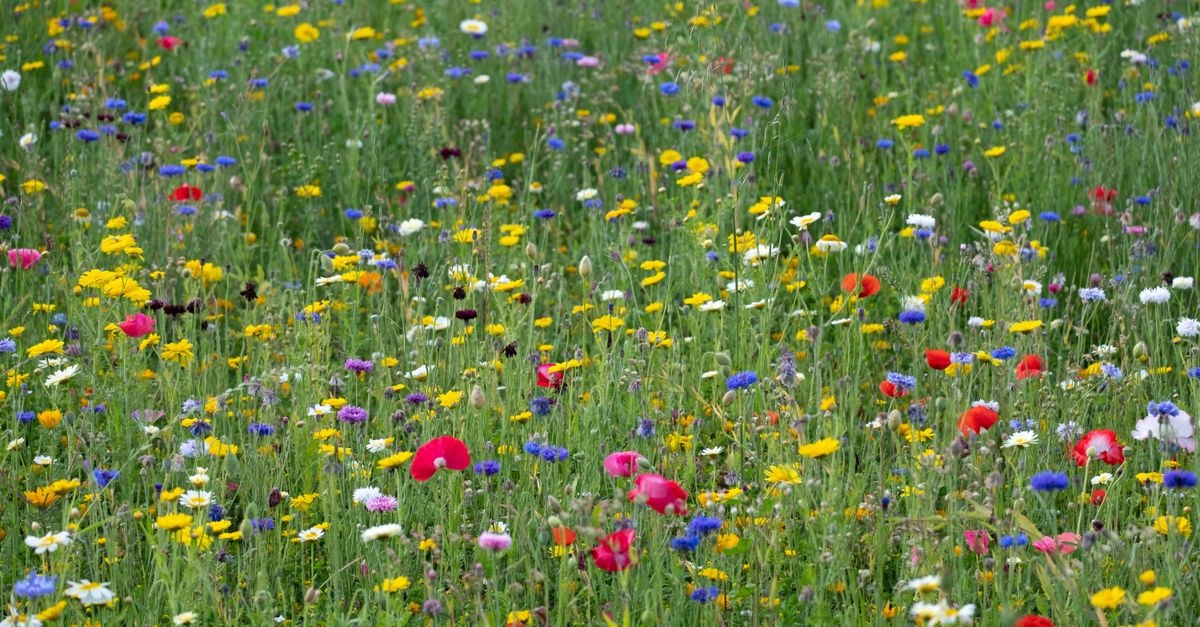
Even the tiniest slice of land can hum with life. With smart planning and a little patience, you can transform a bare patch, balcony box, or curb strip into a small-scale meadow that feeds bees, butterflies, and beneficial insects from early spring through fall. This step-by-step beginner’s guide shows you how to start a micro wildflower meadow—from choosing plants and preparing your site to sowing, first-year care, and long-term maintenance—so your pocket patch becomes a true pollinator refuge.
Why Pocket Meadows Matter
Urbanization and intensive lawn culture have fragmented habitat. A miniature meadow counters that—patch by patch—by offering nectar, pollen, seeds, shelter, and nesting sites. Even 1–2 square meters can:
- Boost biodiversity by supporting native bees, butterflies, moths, beetles, and birds.
- Extend bloom time across the seasons, bridging food gaps for pollinators.
- Improve soil with deep roots that increase infiltration and carbon storage.
- Cut maintenance and inputs versus conventional lawns: less mowing, less watering, no fertilizers.
- Beautify small spaces with dynamic texture, color, and movement.
Best of all, a pocket meadow meets you where you are—front yard, side yard, rooftop, or a container on a stoop—proving you don’t need acreage to help nature thrive.
How to Start a Micro Wildflower Meadow: The Big Picture
A thriving mini meadow rests on four pillars: the right site, the right plants, clean soil preparation, and simple, consistent care. Think of the process as a sequence:
- Plan: Clarify goals, measure sun and soil, pick a style (annual pop vs. perennial staying power).
- Prepare: Remove weeds and lawn thoroughly; reduce the weed seed bank.
- Sow or plant: Time your seeding for the season, ensure good seed-to-soil contact, water lightly.
- Maintain: Mow high in year one, weed selectively, then cut back once yearly in winter or early spring.
Planning Your Tiny Meadow
Define Your Goals
Before you buy a seed mix, ask what you want most from your meadow:
- Pollinator buffet with continuous bloom from spring to fall.
- Monarch- or butterfly-forward focus with host plants (e.g., milkweeds for monarchs, violets for fritillaries).
- Low, tidy “lawn alternative” for curb appeal and HOA-friendly edges.
- Quick color (annuals) vs. long-term resilience (perennials and grasses).
Clarity helps you pick the right seed mix, prepare properly, and set expectations for the first few seasons.
Measure Sun, Shade, and Microclimate
Most meadow flowers want at least 6 hours of direct sun. If you have partial shade (3–5 hours), choose woodland edge or shade-tolerant species. Note reflected heat (south-facing walls), wind exposure (rooftops), and drainage. Microclimates drive success in pocket plantings.
Understand Your Soil
You don’t need perfect soil for a mini meadow. In fact, lean soils often mean fewer weeds and sturdier growth. Still, it helps to know:
- Texture: Sand drains fast; clay holds water; loam is balanced.
- Drainage: After a rain, does water pool for hours? That suggests heavier soils—choose species that tolerate wet feet.
- Compaction: Foot traffic and old lawns can be tight; light aeration or breaking the crust helps seeds connect to soil.
- pH: Most wildflowers thrive between 6.0–7.5, but many are adaptable.
Resist heavily enriching the soil. Skip high-nitrogen fertilizers. They favor weeds and floppiness. Instead, focus on removing the existing vegetation and thatch.
Pick a Meadow Style
- Annual-forward “color blast”: Quick results from cosmos, cornflower, poppies, and phacelia in year one; re-sow or allow self-seeding.
- Perennial-based “pocket prairie”: Slower to start, but durable, drought-tolerant, and fuller by years 2–3 with coneflower, yarrow, black-eyed Susan, asters, and goldenrods.
- Mixed annual/perennial: Annuals provide first-season bloom while perennials establish underneath.
- Low-growing meadow lawn: Fine fescues, clovers, self-heal, and short daisies create an “eco lawn.”
Choose Native—and Local—Species
“Right plant, right place” drives success. Favor native wildflowers and companion grasses adapted to your region and conditions. If you’re in North America, consult resources like the Xerces Society, your state’s native plant society, or USDA hardiness zone guidance. In the UK and Europe, check RHS Plants for Pollinators, local seed houses, or county biodiversity lists. Look for ecoregion-appropriate seed mixes with a high proportion of regionally native species.
Prefer mixes listing scientific names, bloom times, and seeding rates. A few resilient, small-space-friendly plants to consider (confirm regional suitability):
- Sunny, dry: Yarrow (Achillea millefolium), Blanketflower (Gaillardia), Black-eyed Susan (Rudbeckia hirta), Coreopsis spp., Purple coneflower (Echinacea purpurea), Catmint (Nepeta), Verbena rigida.
- Moist/average: Bee balm (Monarda), New England aster (Symphyotrichum novae-angliae), Goldenrod (Solidago), Oxeye (Leucanthemum vulgare, non-native but common), Penstemon spp., Prairie dropseed (Sporobolus heterolepis).
- Partial shade: Woodland phlox (Phlox divaricata), Columbine (Aquilegia), Foamflower (Tiarella), Zigzag goldenrod (Solidago flexicaulis), Sweet woodruff (Galium odoratum, non-native in some regions), sedges (Carex spp.).
- Grasses and sedges: Little bluestem (Schizachyrium scoparium), Tufted hairgrass (Deschampsia), Fescues (Festuca spp.), Sedge mixes (Carex spp.) to provide structure and suppress weeds.
Preparing the Ground
Soil preparation is where most success or failure is baked in. The key is removing existing vegetation and thatch so seeds reach mineral soil without intense competition. In small spaces, a weekend of good prep replaces months of frustration.
Pick a Removal Method
- Smothering (sheet mulching): Lay overlapping cardboard (no glossy ink) over lawn/weeds, wet it, and top with 5–8 cm of coarse, low-fertility mulch. Wait 6–10 weeks in warm seasons (longer in cool). Cut slits to seed into soil after cardboard softens, or peel back to expose soil. Great for small beds and curb strips.
- Solarization: In peak summer, clear-cut vegetation, water the soil, then cover tightly with transparent plastic for 4–8 weeks to heat-kill seeds and roots. Effective on annual weeds; less so on deep-rooted perennials like bindweed.
- Lift-and-flip sod: For tiny patches, slice out turf, flip it upside down to compost in place under cardboard, and top with mulch. Seed later when decomposition advances.
- Manual removal: Dig out tenacious invaders (e.g., Bermuda grass, couch/quackgrass, bindweed) thoroughly, removing rhizomes. Persistence now saves years later.
- No-till stale seedbed: Scuff soil lightly to germinate weed seeds, water, let them sprout, then hoe off seedlings; repeat 2–3 cycles before sowing. Reduces the weed seed bank.
In micro meadows, avoid deep tilling unless necessary to break compaction; it can bring up dormant weed seeds. Aim to expose clean, lightly roughened soil with minimal live competition.
Fine-Tune the Surface
- Rake off thatch and debris so seed can touch soil.
- Scarify lightly with a rake to create shallow grooves.
- Aerate gently if compacted—use a garden fork to crack, not churn, the soil.
- Avoid rich compost layers that fuel weeds and floppiness; a dusting of screened compost is okay if soil is extremely poor.
Sowing Strategies That Work
You’ve prepared your patch; now help seeds land, settle, and sprout. Success hinges on timing, even distribution, and moisture.
Best Timing by Climate
- Dormant seeding (late fall to mid-winter): Many natives need cold stratification. Sow after hard frosts when seeds won’t sprout until spring; freeze-thaw improves contact.
- Early spring sowing: Works well for annual color mixes and many perennials; keep moisture steady during germination.
- Summer sowing: Riskier unless you can irrigate consistently. Consider container meadows if heat and drought are intense.
Get the Seeding Rate Right
Follow your mix’s label. As a rough guide, small native meadow mixes often range from 2–6 grams per square meter for wildflowers, plus 1–3 grams for grasses. In tiny plots, it’s easy to over-seed. Too-dense sowing causes spindly growth and fungal issues.
Use a Carrier for Even Spread
To avoid clumping, blend seed with an inert carrier like dry sand, sawdust, or vermiculite at a 1:10 seed-to-carrier ratio. Split the mix into two buckets and broadcast half in one direction, half perpendicular for even coverage.
Ensure Seed-to-Soil Contact
- Press, don’t bury: After broadcasting, walk over the area or use a roller. Most wildflower seeds need light; burying can reduce germination.
- Top-dress lightly: A whisper of fine compost or straw (seed-free) can reduce desiccation and bird predation—but keep it thin so light reaches seeds.
Water for Germination—Gently
- Fine mist only: Use a watering can with a rose or a hose set to mist to avoid washing seeds away.
- Keep consistently moist until seedlings are established—often 3–6 weeks. Then taper to deeper, less frequent watering to promote root growth.
Protect Seeds from Birds and Blast Rains
- Row cover or light jute netting can deter birds and buffer heavy rain splash. Remove once seedlings are several centimeters tall.
- Edge defense: Small logs, stones, or low edging keep seeds from migrating off your patch.
Pocket Meadow Alternatives: Containers, Turf, and Plugs
Container and Balcony Meadows
No ground? No problem. A large container (30–45 cm deep) with drainage holes can host a mini meadow. Use a free-draining, low-fertility medium (mix of peat-free potting mix, sharp sand, and grit). Sow a dwarf wildflower blend or plant small plugs like self-heal (Prunella), thyme (Thymus), dwarf clovers, and mini cosmos cultivars. Water more frequently than in-ground patches and deadhead annuals to prolong bloom.
Wildflower Turf and Plug Planting
For instant structure or tricky sites, consider:
- Wildflower turf: Pre-grown mats of mixed species you lay like grass turf—pricey but immediate.
- Plugs: Small starter plants placed 20–30 cm apart. Interplant a few grasses for stability. Great for beating weed pressure and for shady or compacted spots.
First-Year Care: Establishment is Everything
Year one is about helping seedlings win against weeds and stress.
Mow High to Reduce Weed Shade
For in-ground sowings, if annual weeds surge, mow or string-trim at 10–15 cm whenever weeds threaten to smother seedlings. This prevents shading while leaving wildflower rosettes intact. Expect 2–4 trims over the first growing season.
Water Wisely
- Establishment phase: Keep evenly moist. After roots deepen, water only during extended droughts to encourage resilience.
- Containers: Check daily in heat; water thoroughly but ensure free drainage.
Weed with Intention
Learn the look of your target seedlings (your seed mix should provide a guide). Remove aggressive invaders early: crabgrass, bindweed, nutsedge, thistles, and rhizomatous lawn grasses. Hand-pull after rains for best results. Avoid bare patches by spot-sowing if you remove a large clump.
Set Cues to Care
Pocket meadows can look “wild” before they settle. Simple cues to care signal intention and boost curb appeal:
- Mown paths or a neat edge of pavers.
- Low fence or edging to frame the meadow.
- Signage explaining “Pollinator Habitat” or “Pocket Meadow in Progress.”
Second Year and Beyond: Simple, Seasonal Maintenance
Annual Cut-Back
Once yearly, cut down spent stems to 10–20 cm in late winter or very early spring—after the coldest weather but before new growth. This timing preserves overwintering insects and nests in hollow stems while recycling nutrients on site (“chop and drop”). In very small spaces, hand shears or a scythe suffice.
Overseeding and Gap-Filling
If gaps appear, overseed in late fall (dormant) or early spring. You can also plug-plant a few perennials to thicken the stand or add seasonal accents (e.g., asters for fall color). Lightly roughen bare spots and press seeds firmly.
Manage the Go-Getters
Some stars can hog space (e.g., goldenrod in rich soils, mints, black-eyed Susan). Thin clumps every couple of years or deadhead to limit self-seeding. A diversity-first mindset keeps your micro meadow balanced.
Leave the Leaves, But Keep It Tidy
Fallen leaves and hollow stems shelter bees and butterflies. Leave some material over winter; tidy edges in fall for neighbors, then do your main cutback late winter. Use a light hand with mulches in active meadows—they can smother seedlings.
Designing for Year-Round Bloom
Plan a Bloom Calendar
For a pocket patch, aim for at least three species in each seasonal window:
- Early spring: Willow catkins (nearby), prairie smoke (Geum triflorum), wild strawberry (Fragaria), phacelia.
- Early to mid-summer: Coreopsis, bee balm, purple coneflower, yarrow.
- Late summer to fall: Goldenrods, asters, Joe-Pye weed (Eutrochium), sedum (Hylotelephium, non-native but valuable), sunflowers (Helianthus).
Weave in Grasses for Structure
Companion grasses like little bluestem, sideoats grama, fescues, and tufted hairgrass add texture and winter interest while knitting roots that suppress weeds. In tiny beds, keep grasses to 20–40% of the mix to avoid crowding out flowers.
Edges, Paths, and Height Tiers
Neaten the look with a short front tier (self-heal, low daisies), a mid-tier (coreopsis, coneflower), and a taller backdrop (asters, goldenrods). A flagged or stone-edged path breaks up the mass and invites exploration while acting as a maintenance lane.
Wildlife Value and Garden Ethics
Feed, Host, and Shelter
True pollinator gardens support full life cycles. Alongside nectar and pollen, include host plants for caterpillars (milkweeds for monarchs, violets for fritillaries, lupines for blues). Leave some bare soil edges or sand pockets for ground-nesting bees; offer brushy corners or small “habitat piles” for beetles and solitary wasps.
Bee Hotels—Use with Care
Commercial bee hotels can concentrate pests and disease if not cleaned. In pocket meadows, stems left standing (10–20 cm) and diverse structure often serve solitary bees better than dense hotel blocks. If you do add a hotel, keep holes small (3–8 mm), face southeast, and clean or replace annually.
Pesticide-Free, Always
Avoid insecticides (including “organic” broad-spectrum products). Embrace integrated pest management: right plant, right place; healthy soil; tolerating some chewing; and hand controls only when needed. Many “pests” feed beneficials higher up the food chain.
Troubleshooting Common Problems
Poor Germination
- Cause: Seed buried too deep, surface dried out, or sown too hot/cold.
- Fix: Press seed onto soil, keep evenly moist, and time sowing to early spring or late fall. Consider dormant seeding for species needing cold stratification.
Weed Takeover
- Cause: Incomplete site prep or a rich compost layer favoring weeds.
- Fix: Mow high in year one to knock back weeds; hand-pull rhizomatous invaders; overseed perennials to occupy space; avoid heavy fertilizers.
Floppy or Lodging Plants
- Cause: Too much nitrogen, too little sun, or overcrowding.
- Fix: Thin clumps, cut back in midsummer to encourage bushy regrowth, reduce fertility, and add supportive grasses.
Neighbor or HOA Concerns
- Cause: Perception of messiness.
- Fix: Keep crisp edges, add signage, maintain a mown path, and ensure no encroachment on sidewalks or property lines.
Budget and Supplies Checklist
Core Tools and Materials
- For prep: Spade or sod cutter, digging knife, steel rake, hoe, cardboard for sheet mulching.
- For sowing: Measuring tape, bucket, dry sand carrier, watering can with rose, light straw/jute netting (optional).
- For care: Hand shears, string trimmer, gloves, ID guide for seedlings and weeds.
Costs scale with size. A small high-quality native seed mix may run modestly for a few square meters—choose quality over quantity for better outcomes.
Quick-Start Planting Recipes
Sunny and Dry (Low Water)
- Flowers: Coreopsis lanceolata, Gaillardia pulchella, Rudbeckia hirta, Echinacea purpurea, Salvia greggii (or native salvias), Verbena rigida.
- Grasses: Schizachyrium scoparium, Festuca glauca.
- Notes: Minimal irrigation after establishment; great for curb strips.
Average Garden Soil (Sun)
- Flowers: Monarda fistulosa, Penstemon digitalis, Achillea millefolium, Rudbeckia fulgida, Asclepias tuberosa (if well-drained), Symphyotrichum novae-angliae.
- Grasses: Sporobolus heterolepis, Elymus canadensis (use sparingly in tiny beds).
- Notes: Balanced mix with long bloom and solid fall color.
Partial Shade or Dappled Light
- Flowers: Aquilegia canadensis, Phlox divaricata, Tiarella cordifolia, Solidago flexicaulis, Geranium maculatum.
- Grasses/Sedges: Carex pensylvanica, Deschampsia cespitosa.
- Notes: Keep fertility low; water during dry spells in year one.
Heavy Clay, Seasonally Wet
- Flowers: Rudbeckia laciniata (space well), Eutrochium purpureum, Asclepias incarnata, Lobelia cardinalis (if consistently moist), Symphyotrichum puniceum.
- Grasses: Panicum virgatum (shorter cultivars), Deschampsia.
- Notes: Avoid deep tilling; plant plugs if drainage is marginal.
Community, Compliance, and Certification
Be a Good Neighbor
Maintain neat edges, keep sightlines clear, and prevent spillover onto sidewalks. Share your intent with neighbors and offer seed packets to build goodwill. A small sign—“Pollinator Habitat—Pesticide-Free”—goes a long way.
Navigating HOAs and Local Rules
Many communities now allow naturalized landscapes with guidelines. Print your plan, include maintenance notes, and emphasize cues to care. Mowed borders and seasonal cutbacks often meet requirements.
Join Citizen Science and Get Certified
Register as a Monarch Waystation, Certified Wildlife Habitat, or add your patch to local pollinator counts. These programs provide signage, plant lists, and credibility that can smooth community acceptance.
Frequently Asked Questions
Q: Is it better to seed or plant plugs?
A: For tiny spaces, plugs give faster, more predictable results—especially in weedy or shaded sites. Seeding is budget-friendly and diverse but requires excellent prep and patience.
Q: Can I start in summer?
A: Yes, if you can water diligently. Otherwise, dormant seeding in late fall or early spring sowing is easier for beginners.
Q: Do I need to fertilize?
A: No. Most wildflowers thrive in lean soils. Fertilizers often encourage weeds and weak growth.
Q: What about “No Mow May”?
A: Letting lawns grow for a month helps some pollinators, but a purpose-built pocket meadow with native species provides far richer, longer-lasting habitat.
Q: How long until it looks great?
A: Annual mixes can shine in 8–10 weeks. Perennial-forward meadows take a season to settle and hit their stride in years 2–3—worth the wait for durability and depth.
Step-by-Step Summary
- 1. Plan: Define goals; assess sun, soil, and space; choose a native-heavy mix or plugs.
- 2. Prepare: Remove turf/weeds via sheet mulching or solarization; rake clean; lightly scarify.
- 3. Sow: Time for early spring or late fall; mix seed with sand; broadcast evenly; press in.
- 4. Water: Fine mist until germination, then water less frequently but more deeply.
- 5. First-year care: Mow high to check weeds; weed selectively; keep edges neat.
- 6. Maintain: Annual late-winter cutback; overseed gaps; manage aggressive species.
Conclusion: Your Patch, Their Lifeline
When you learn how to start a micro wildflower meadow, you unlock a simple, scalable way to restore habitat—one doorstep at a time. With a weekend of prep, a palmful of regionally appropriate seed, and light seasonal care, your small space can host dazzling blooms, buzzing bees, and fluttering wings. Mark out a patch today, post a sign, and enjoy the transformation—your pocket paradise will repay you in color, life, and song for seasons to come.
Mini Meadow Checklist (Print This)
- Site: 6+ hours sun (or choose shade-tolerant species); note drainage.
- Prep: Remove turf/weeds thoroughly; rake and scarify.
- Seed: Native-heavy, region-appropriate mix; carrier for even spread.
- Timing: Early spring or late fall (dormant seeding).
- Sowing: Broadcast, press in, light top-dress if needed.
- Water: Fine mist to establish; then deep, occasional watering.
- Care: Mow high year one; tidy edges; late-winter cutback yearly.
- No pesticides; add host plants; leave stems over winter.
Ready to begin? Map your space, pick a native seed mix that matches your sun and soil, and start small. By this time next year, you’ll have a thriving micro meadow that proves big ecological wins can grow from the smallest of patches.